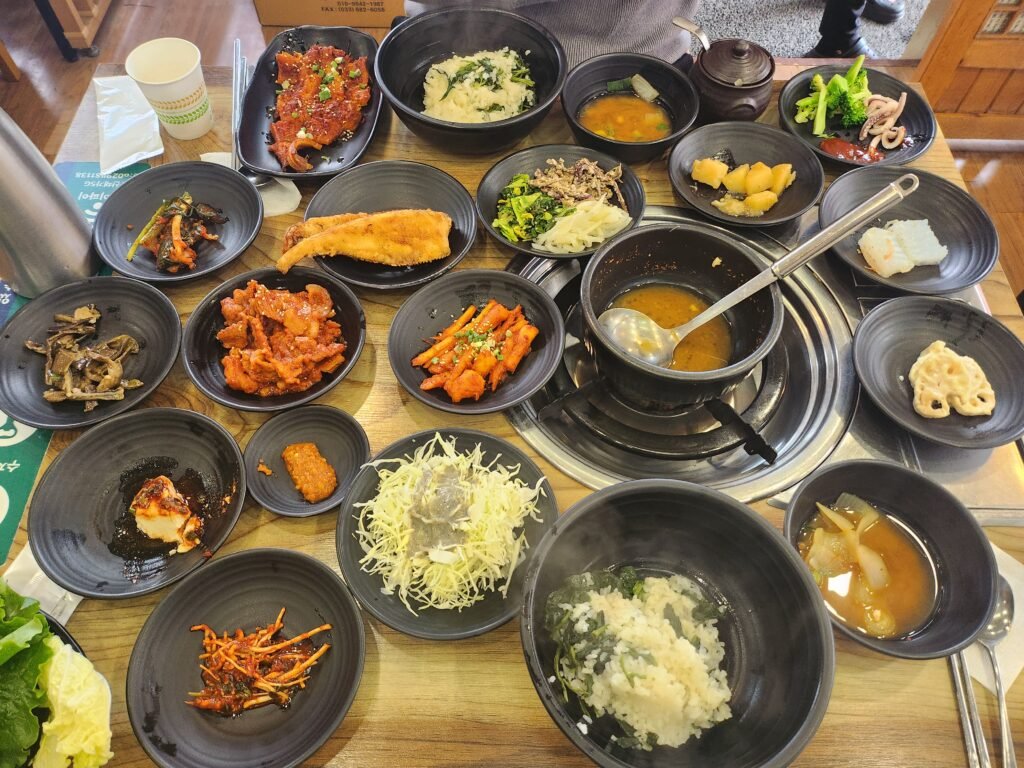
If you’ve never been to South Korea, you probably picture a Korean breakfast as a full spread: rice, soup, kimchi, grilled fish, and a handful of side dishes laid neatly across the table.
That image isn’t wrong, exactly. It’s just decades out of date.
The Number That Surprised Us
According to South Korea’s Korea Disease Control and Prevention Agency (KDCA), which runs the country’s official National Health and Nutrition Examination Survey, the national breakfast skip rate hit 35.3% in 2024 — up from 26.2% in 2015. That’s a 9.1 percentage-point increase in less than a decade, and it keeps climbing every year.
Break it down by age, and the picture gets sharper. Among people in their 20s, the skip rate is 62.1% — by far the highest of any age group. Among women in their 20s specifically, it’s 67.5%. That means roughly two out of every three young Korean women are not eating breakfast at all.
This isn’t a casual survey. It’s a government health indicator tracked annually because it feeds directly into national nutrition policy. A number moving this consistently, for this long, points to something structural — not just a few people running late one morning.
So What Changed?
A few forces are doing the work here, and they compound:
Urban work culture. Long commutes and early start times eat directly into the morning. When sleep and breakfast compete, sleep tends to win — especially for people in their 20s and 30s navigating Korea’s demanding work and study schedules.
The rise of single-person households. A home-cooked breakfast assumes someone is preparing it — traditionally a shared household task. As more young Koreans live alone, the daily infrastructure of a traditional breakfast (rice already cooked, side dishes already made) simply isn’t there every morning.
A shift toward “healthy pleasure” . This one’s counterintuitive: rising health-consciousness hasn’t brought back the traditional breakfast table. It’s redirected it toward something faster and lighter.
Where the Breakfast Actually Went
Retail data backs this up. Convenience store chains have reported double-digit growth in early-morning food sales (6–10 AM) for several consecutive years, with triangle kimbap (samgak kimbap) standing out as the fastest-growing single item — driven specifically by shoppers in their 20s and 30s. Chains have responded by launching healthier breakfast-specific products, like multigrain rice balls in clear packaging, aimed squarely at this group.
In other words: even Korea’s “fast food” is being optimized for health-conscious twenty-somethings in a hurry, not just convenience.
What This Means If You’re Visiting
Don’t expect to find breakfast restaurants in Korea the way you might in North America or Europe. Outside of hotels, the culture of “going out for breakfast” is surprisingly limited, and many restaurants don’t open until later in the morning.
The good news? You don’t need a hotel buffet to eat like a local. If you want to experience how modern, urban Koreans actually start their day, here are your most realistic options:
Convenience Stores
This is probably the closest thing to the average Korean weekday breakfast. Walk into any CU, GS25, 7-Eleven, or Emart24 and you’ll find triangle kimbap, sandwiches, hard-boiled eggs, protein drinks, bananas, and fresh coffee — most locations open 24 hours. A triangle kimbap and an iced Americano may not look glamorous, but statistically, it’s one of the most common breakfast combinations in the country right now.
Coffee Chains
Many Koreans skip a full breakfast entirely and grab a coffee with something small on the way to work instead. Chains like Mega Coffee, Compose Coffee, Paik’s Coffee, and Starbucks are everywhere, especially near subway stations and office districts. A sandwich, bagel, or pastry with an iced Americano — even in winter — is a typical morning choice.
Kimbap Restaurants
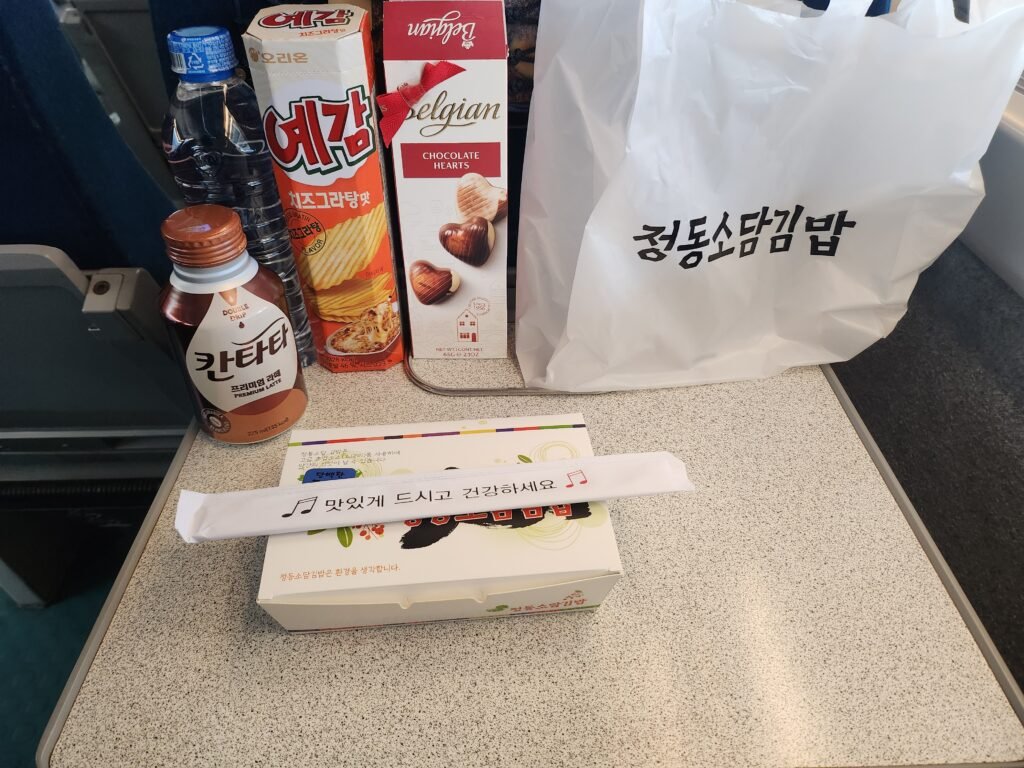
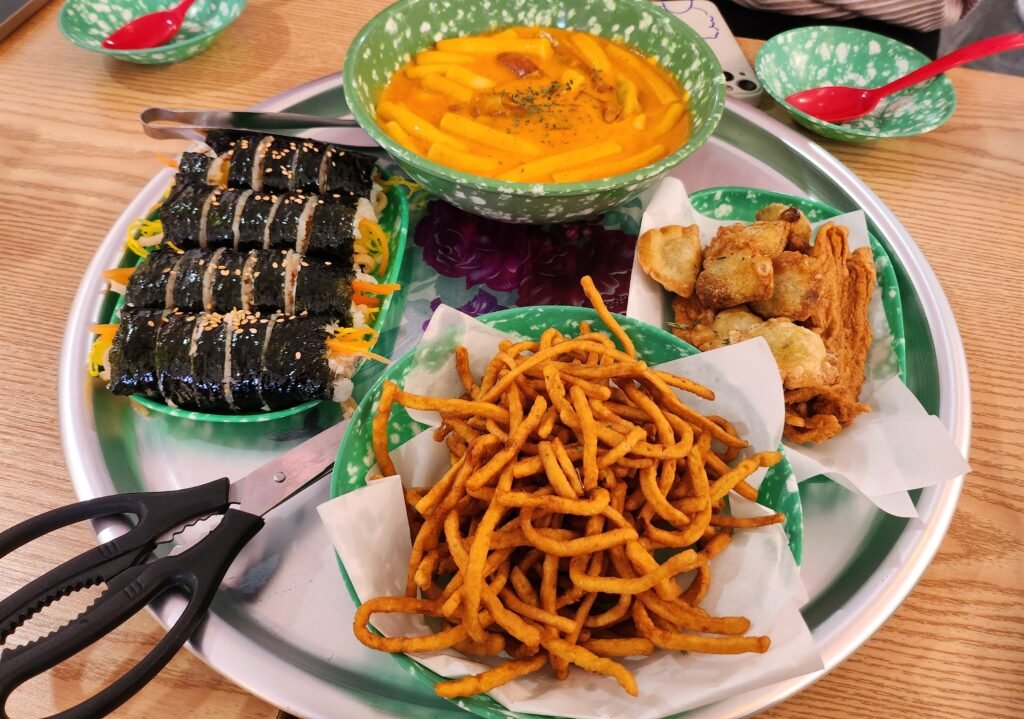
For something more filling, look for a local kimbap restaurant. Chains like Kimbap Cheonguk, along with countless independent shops, open early and serve affordable kimbap, ramyeon, dumplings, and rice dishes. They’re fast, cheap, and used daily by students, office workers, and taxi drivers alike.
Soup Restaurants
For a more traditional experience, look for restaurants serving gukbap (rice soup), seolleongtang (ox bone soup), or haejangguk (hangover soup) — many open early or run 24 hours. Look for signs reading 국밥, 설렁탕, or 해장국, or check Naver Map for nearby options. A hot bowl of soup with rice and side dishes is about as close as you’ll get to the traditional Korean breakfast many foreigners picture.
Bakeries
Korea’s bakery culture is easy to overlook. Chains like Paris Baguette and Tous Les Jours open early with sandwiches, pastries, and coffee — a solid middle ground between convenience-store food and a full sit-down meal.
The Bottom Line
The rice-soup-kimchi breakfast still exists — but it’s increasingly a weekend habit, or an older generation’s habit, not a daily one. The most accurate snapshot of a Korean breakfast in 2026 isn’t a temple-stay cooking class. It’s a 26-year-old office worker grabbing a triangle kimbap and an iced Americano on the way to the subway.
Statistically, that’s not a downgrade from the “real” Korean breakfast.
It is the real Korean breakfast now.